
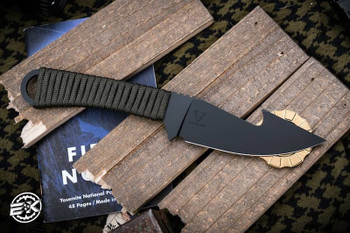
An Outdoor Enthusiast's Guide to Gut Hooks
Posted by EKnives on Sep 9th 2025
If you've ever stared at that little curved notch on your blade and thought, "What in the name of all things sharp is that for?" Congrats. You've officially encountered a gut hook. And if you spend time in the woods chasing deer, camping off-grid, or just pretending you're Bear Grylls for the weekend, it might just be the hidden hero of your knife kit.
A gut hook isn't just a fancy accessory that looks cool as you browse folding and fixed blade knives for sale , looking for the next blade to add to your collection. It's a field-dressing cheat code, but only if you know how to wield it properly. So sharpen your curiosity, and let's slice into how this tool works, when to use it, and why it's worth keeping razor-ready.
What Is a Gut Hook, and Why Should You Care?
That tiny claw on the spine of your knife? That's the gut hook. It's a specialized blade feature designed to open up an animal's abdominal cavity cleanly without turning your venison into a mess of busted intestines and regret. It gets you into the gut cleanly and efficiently, which is how it got its name.
Instead of plunging your main blade into delicate territory and hoping you don't nick anything that compromises your meat, you use the hook like a zipper. It grabs just the skin and peels it back, neat as can be. Less mess. Less risk of contamination. More control when your fingers are frozen, the sun's setting, and you're three cups of coffee past steady hands.
When you're field dressing big game like deer or elk, a gut hook can take a gruesome task and turn it into something—dare we say?—satisfyingly efficient. Like slicing open a vacuum-sealed steak, only it's a steak that was running through the trees minutes earlier.
How to Use a Gut Hook Without Butchering the Job
First things first: don't wing it. Technique matters.
- Start Small: Use your main blade to make a short incision near the base of the sternum. This gives the hook a starting point.
- Hook It Right: Slip the gut hook under the skin, with the sharpened edge facing outward (toward the outer surface, not the guts).
- Pull Steady: Apply gentle, even pressure as you pull toward the chest or hindquarters. Think "unzipping a coat," not "tearing open a bag of jerky in hangry frustration."
A dull hook or erratic hand turns this into a game of slip-and-slice, and that's how accidents happen. Keep the motion smooth and the pressure consistent. Let the blade do the work. It's a slice, not a tear or smash.
Maintenance Tips for a Happy Hook
Gut hooks don't take care of themselves. And no, you can't just run them across a flat stone and call it a day. Their curved design takes a little finesse.
- Use a round ceramic or diamond rod. Match the curve of the hook and make small, even passes.
- Short strokes win. Don't try to force long ones. You'll either slip or grind it down unevenly.
- Clean that hook! After every use, rinse thoroughly. Gunk loves to hide in there. A toothpick, cotton swab, or your favorite improvised cleaning tool will do the trick as long as you are thorough.
- Dry and protect. Rust is a real enemy, especially if your blade is carbon steel. Coat the hook lightly with oil or wax if you're heading into humid conditions or leaving it in storage.
Bottom line? A sharp hook is a happy hook. And a happy hook makes your life easier when the real work begins.
When the Gut Hook Should Stay in the Sheath
As handy as gut hooks are, they're not always the sharpest choice in the drawer.
- Small Game: If you work on a smaller animal, your gut hook might feel like using a machete to open a granola bar wrapper.
- Minimalist Packing: The hook can add a bit of bulk. While it does some jobs better than other tools, if you are looking to downsize, you might skip it.
- EDC Caution: Gut hooks love to snag on fabric and gear, and they're not exactly ideal for tasks like batoning or fine carving. A knife with a prominent gut hook may not be the best choice for everyday carry, especially if it's hanging out in your pocket.
They're a specialized tool, not an all-purpose one. So if you rarely hunt or don't plan on breaking down animals in the field, you might skip the hook and stick with a leaner blade setup.
Final Cut: Should You Carry a Gut Hook?
If you're serious about the hunt, then yes. Find a knife with a gut hook. It more than earns its keep the first time it saves your meat (and your sanity) during a messy field dress. It's a small feature with sharp benefits.
But like every piece of outdoor gear, it needs care. Learn to sharpen it. Clean it like it matters. And use it with the respect a good blade deserves.
Next time you're browsing hunting knives for sale or packing for your next trip, take a hard look at your gear. If your current knife doesn't have a gut hook, or if you've been ignoring the one you have, it might be time to give this curvy little tool its moment to shine.
Trust us, your future self (the one elbow-deep in field dressing) will thank you.