
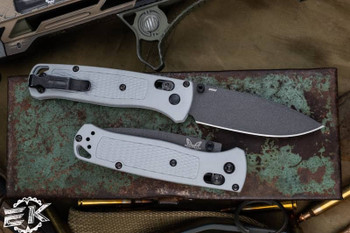
Finding the Perfect Size for Your EDC Pocket Knife
Posted by EKnives on May 22nd 2025
Choosing the right size for your everyday carry (EDC) pocket knife is a bit like picking the perfect swim trunks—too big, and it’s uncomfortable; too small, and it won’t get the job done. Whether you’re slicing open packages, cutting rope, or just fidget-flipping your blade during meetings (we see you), size matters when it comes to your EDC knife.
So, how do you find the Goldilocks zone for pocket knives that are juuuuust right? Let’s break it down so you can carry a blade that’s perfectly sized for you and your needs.
Pocketability: Does It Disappear or Dominate?
If your knife isn’t comfortable to carry, you won’t carry it—it’s that simple. The whole point of an EDC knife is that it’s there when you need it and out of the way when you don’t.
Consider These Questions:
- Does the knife fit well in your pocket, or does it feel like you’re hauling a brick?
- If you ever carry your knife somewhere other than your pocket, does it fit in your boot, holster, or any other way you might carry it?
- Do you prefer a clip-carry knife or one that drops freely into your pocket?
- Is the handle too thick or long to carry discreetly? Fit is one thing, but if you don’t want to announce to the world that you are carrying, a knife-shaped lump in your pocket is not subtle.
General Guidelines:
- Small knives (under 3.75 inches) – Disappear in your pocket, lightweight, fantastic for simple tasks.
- Medium knives (3.75-4.25 inches) – Ideal balance of portability and function for most EDC users.
- Large knives (4.25+ inches) – Great for heavier tasks but can be bulky for pocket carry.
If you need something discreet, a Benchmade Mini Griptilian, with its closed length of 3.7 inches, is a solid pick.
The Blade: How Much Cutting Edge Do You Need?
The blade length is the business end of your knife, so you’ll want to get a knife appropriate for your needs. Even though you carry it daily, you likely have specific things you intend to cut or reasons you carry. Consider what you use your knife for.
Breaking It Down:
- Small blades (under 3 inches) – Perfect for light-duty tasks like opening packages, cutting tape, or slicing fruit. Many jurisdictions have legal restrictions on blades over 3 inches, so a smaller size can be a wise choice.
- Medium blades (3-3.5 inches) – Ideal for most EDC needs, balancing compactness with cutting ability.
- Large blades (3.5+ inches) – Better for outdoor and heavy-duty tasks but can be intimidating in casual settings. These also have a longer folded length, so pocket fit can be questionable.
If your knife is primarily for urban EDC, a compact blade keeps things low-profile while still being effective. On the other end of the scale, if you want something more substantial and don’t mind a little bulk, a Microtech MSI and its 3.85-inch blade give you more cutting power without going too far overboard.
The Handle: Grip, Comfort, and Control
A blade is only as good as the handle that controls it. Too small, and your grip suffers; too big, and it becomes a hassle to carry and awkward to use.
What to Look for in an EDC Handle:
- Length: Can you comfortably fit all your fingers on it? You don’t want your pinky hanging off the end like it would drinking tea with fussy British Royals.
- Thickness: A slim profile carries easier, but a thicker handle can provide better grip.
- Material: G-10, titanium, carbon fiber, and aluminum all have their perks—choose based on weight, durability, and feel.
Benchmade, Microtech, and other quality knife brands have pocket knife lineups that offer a variety of handle options, from the lightweight to the rugged, so you can find the perfect fit for your grip.
Weight: Light as a Feather or Built Like a Tank?
EDC knives range from feather-light to unapologetically hefty. Weight matters because you’ll be carrying this knife every day, so ask yourself these questions:
- Do you want something ultralight that you’ll forget is in your pocket?
- Are you okay with a bit of heft if it means better durability and performance?
- Will you wear it in gym shorts, jeans, or a tactical belt?
A lightweight EDC like the Benchmade Bugout (about 1.85 oz, depending on the edition) is barely noticeable in your pocket. On the other hand, Microtech’s Socom Elite (about 5 oz for most editions) is a beast built to take a beating.
Legal Considerations: Stay Sharp, Stay Legal
Knife laws vary widely, so before you decide on a blade, make sure it’s legal to carry in your area. Some common restrictions include:
- Blade length limits (often under 3 inches in urban areas)
- Restrictions on automatic knives or assisted openers
- Local laws on concealed carry vs. open carry
If unsure, always check the laws in your home area and any other locations you think you’ll visit regularly.
Use Case: Match Your Knife to Your Needs
Think about how you’ll use your knife. A small, lightweight folder is great for city life, while a larger, more robust knife is better for outdoor adventures.
Who You Are = What You Need
- Office Warrior: A compact, discreet knife won’t scare coworkers but will still ensure you are covered if you need a knife.
- Weekend Adventurer: Your pocket needs a rugged workhorse ready for anything.
- Heavy-Duty User: If your knife sees hard use, find a monster built to last and slash.
Final Cut
Finding the perfect size for your EDC pocket knife comes down to balancing comfort, practicality, and legal considerations. A well-sized knife should feel like an extension of your hand, not an anchor in your pocket.
Whether you go small and sleek or big and bold, choosing the right blade size ensures your knife will be a trusty companion, not an afterthought or a burden.