Handle With Care: Waterproofing Your Wood Knife Handle
Posted by EKnives on Aug 21st 2025
If your wooden knife handle has ever gotten soggy, splintery, or just plain sad-looking after a soggy hike or rainy camping trip, you know the truth: wood and water aren't besties. Sure, a wood grip looks amazing, but it also has a not-so-secret nemesis named moisture.
But don't panic! You don't have to give up the beauty of natural wood for something plasticky just to stay dry. With a few simple tricks, your wooden handle can be nearly as water-resistant as your raincoat, and a lot better looking.
Whether your knife is your daily sidekick, a rugged outdoor tool, or a prize from your favorite online knife store, this guide will show you how to protect the soul of your blade: the grip.
Why Moisture Is the Archenemy of Wooden Knife Handles
Wood is a living material—okay, was living—and like all things natural, it still reacts to the world around it. That means it absorbs water like a sponge at a pool party. And when it does? Bad things happen.
Grip comfort decreases, wood fibers weaken, and the scales may separate from the tang. Over time, untreated wood loses the texture on its grip and structural stability.
By applying simple protective treatments, you shield the handle from swelling, splitting, and microbial growth. Plus, a well-maintained wooden grip just feels better in your hand.
If your handle feels squishy, flaky, or like it might bail mid-cut, moisture is likely the villain. The good news? You can absolutely turn the tide with a little routine care.
Oils, Waxes, and Sealers
If that sounds like a spa treatment, you aren't too far off base. Think of this like pampering for your pocket knife. Beauty treatments for your Benchmade Bugout. Wellness for your weapon.
No need to be a woodworking genius here. You just need the right products. Here's the short list:
-
- Tung oil or boiled linseed oil: Deep-penetrating, natural, and leaves the wood feeling and looking better than new. These harden as they cure and offer long-lasting protection with a soft luster. Great for EDCs and showpieces.
- Beeswax or carnauba wax: Adds water resistance and shine without making it look like plastic. Best used after oiling.
- Polyurethane or spar urethane: The tough guys. These synthetic sealers add serious armor but can dull that natural feel. These create a more plastic-like surface and are ideal for knives that see wet, heavy-duty use, like fishing or survival knives. However, they can mask the wood's texture and feel slick in hand.
- Tung oil or boiled linseed oil: Deep-penetrating, natural, and leaves the wood feeling and looking better than new. These harden as they cure and offer long-lasting protection with a soft luster. Great for EDCs and showpieces.
Want a grip that feels cozy and looks classy? Oil + wax is your jam. Going whitewater kayaking with a knife clipped to your vest? Go synthetic and don't look back.
Step-by-Step Waterproofing (No Lab Coat Required)
Here's your quick and dirty (well, clean and dry) handle-proofing routine:
-
- Clean it. Wipe off any dirt, gunk, or fingerprints using a damp cloth or rubbing alcohol.
- Dry it. Let it sit in a dry place until it's bone dry. Fully dry. Absolutely, totally dry. Moisture under oil = not good.
- Sand it. Use 400-grit sandpaper to smooth things out. Your oil will thank you.
- Oil it. Rub in your chosen product with a soft cloth. Let it soak for 20 to 30 minutes.
- Cure it. Wipe off the excess and let it cure for 12 to 24 hours.
- Repeat. Do two or three coats for solid protection.
- Wax it. If you're using wax, apply and buff to a shine after the final coat of oil is fully cured.
- Clean it. Wipe off any dirt, gunk, or fingerprints using a damp cloth or rubbing alcohol.
And that's it. No wizardry. No complicated gear. Just a smooth, water-resistant handle that feels like it came from an artisan shop, not a swamp. The more love you show your handle, the better it performs over time.
Keep It Going: Maintenance Tips for Long-Term Grip Glory
Think of your wooden handle like a nice beard or a vintage leather jacket: it gets better with care, but can fall apart fast if you neglect it.
Here's how to keep things looking sharp:
-
- Do a touch-up every few months, especially after wet adventures.
- If the wood looks dry, feels rough, or isn't repelling water anymore, give it a quick oil-and-wax refresh.
- Never leave your knife in a damp leather sheath. That's basically a sauna for your knife handle.
- Store your knife in a dry drawer, not in a steamy garage or under a soggy towel.
- If your handle gets wet, dry it thoroughly right away. Don't wait for mold to RSVP.
- Do a touch-up every few months, especially after wet adventures.
These quick steps will protect the handle's longevity and keep your knife feeling great in your hand.
Want to Minimize Fuss? Choose a Water-Resistant Wood from the Start
Some woods are basically the superheroes of the handle world. They handle moisture like champs, even with minimal maintenance.
If you're shopping for a new blade from your favorite, consider these woods:
-
- Cocobolo
- Ironwood
- Desert ironwood
- Stabilized burl (the unicorn of knife woods)
Stabilized woods are especially dreamy. They're infused with resin under pressure, which makes them practically waterproof. Less maintenance, more time for adventures.
Handle With Care
The blade might be the business end of your knife, but the handle is where the real connection happens. It's what you trust when your hands are wet, cold, or covered in whatever mystery goo just came out of that fish.
A little effort goes a long way toward keeping your knife's grip feeling strong, safe, and solid. Whether you're in the woods, on the water, or just scrolling your favorite online knife retailer late at night (no judgment) with sweaty hands, don't forget the part of the knife that does the holding.
So grab some oil, break out the wax, and show your wood grip some love. Your hands and your knife will thank you later.
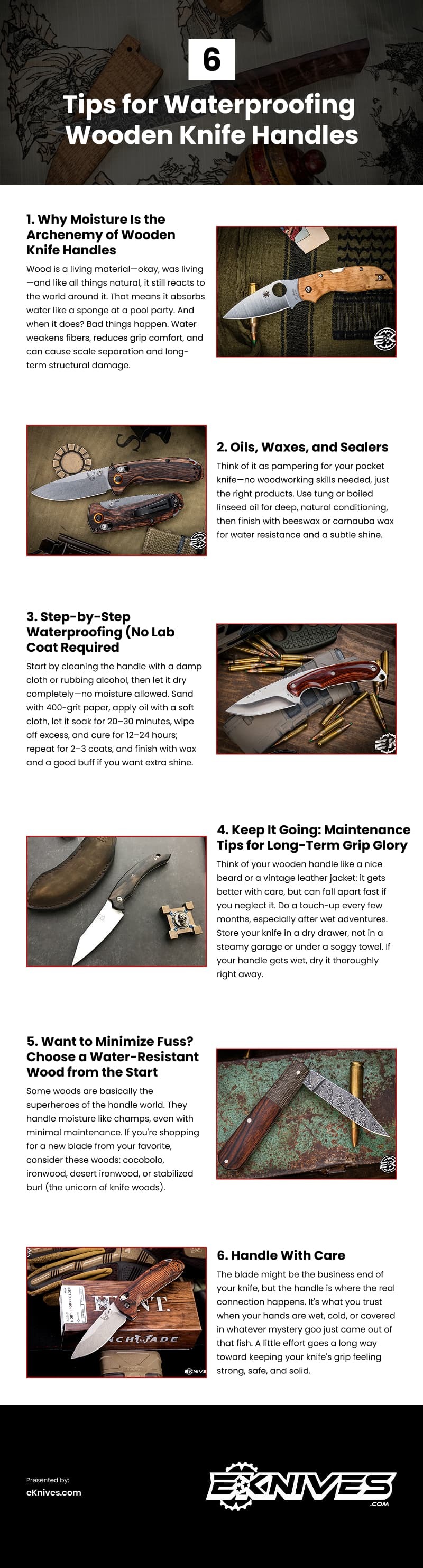
Infographic
Wooden knife handles are beautiful and provide a natural feel, but water can damage them. With proper care, you can keep your handle strong and water-resistant. Check out this infographic for waterproofing tips.