
The Karambit's Versatility in Martial Arts
Posted by EKnives on Mar 17th 2026
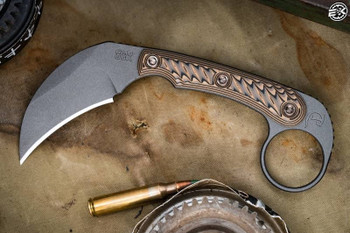
If you have ever scanned online knife listings and stopped mid-scroll at a blade shaped like a tiger's claw, you have already met the karambit. With its dramatic curve and signature finger ring, this knife is instantly recognizable and hard to forget. It looks dangerous and fast, like the beast whose claws it evokes.
What keeps martial artists coming back to the karambit, though, is not the looks. It is the way it blends control, speed, and adaptability into one compact package. In systems ranging from Filipino Kali to Silat and modern combatives, this blade continues to prove it has real bite.
Martial artists are practical by nature. Tools that earn a place in training do so because they work under pressure. The karambit fits that bill nicely. Its shape supports fluid movement, quick transitions, and close-in techniques that match the realities of self-defense. Once you understand how it is meant to move, the design starts to make perfect sense.
From Field Tool to Fighting Blade
Long before anyone debated the best karambit for sale online, this knife was a working tool in Southeast Asia. Farmers in Indonesia and Malaysia used it for tasks like raking roots, harvesting crops, and stripping plant fibers. The curved blade followed natural pulling motions, making repetitive work easier and safer. Efficiency was the name of the game.
Over time, those same motions translated smoothly into self-defense applications. Martial artists realized the curve allowed for controlled slicing with minimal telegraphing. In Silat and Filipino Kali, the karambit became a natural extension of empty-hand movements.
The blade mirrors the arc of the wrist, encouraging circular strikes and traps that feel intuitive once trained. In close quarters, that curve helps maintain contact, which can be critical when space is limited and adrenaline is high.
Built for Control and Retention
One of the karambit's standout features is the finger ring at the base of the handle. This ring is not decorative flair. It is a functional design element that dramatically improves retention. During grappling or weapon transitions, the ring keeps the knife anchored to your hand.
For martial artists, that translates into confidence. You can rotate the blade, switch grips, or recover from a blocked strike without worrying about losing control. The ring also supports reverse-grip techniques, a staple in many karambit-focused systems. If you have ever fumbled a training knife during a drill, you know how quickly things can go south. The karambit helps keep your edge, figuratively and literally.
The Shape Fits the Function
The curved blade does more than look aggressive. It aligns the wrist in a natural position during slashes, reducing strain and improving accuracy. Instead of forcing your arm into awkward angles, the karambit works with your anatomy. This combined effort can result in smoother motion and improved endurance during long training sessions.
The tip excels at hooking and pulling actions, which are common in limb control and disarm techniques. Targeting wrists, forearms, or other soft tissue becomes more precise. This precision is one reason many instructors emphasize controlled, disciplined practice with trainers before moving to live blades. The design is efficient, and efficiency demands respect.
A Natural Fit Across Disciplines
While deeply rooted in Southeast Asian martial arts, the karambit has found a home in many modern systems. Military combatives and law enforcement defensive tactics incorporate it because it performs well in confined spaces. Civilian self-defense programs also value the karambit's compact profile and quick deployment.
In Filipino Kali, practitioners use the karambit for trapping, checking, and flowing from stick or empty-hand techniques. In Silat, it complements low stances and sweeping footwork. In contemporary self-defense, it shines during hand-to-hand transitions where space is tight and reactions must be fast. The knife adapts easily, which is why it continues to cut across stylistic boundaries.
Training Benefits That Add Up
Martial artists often choose tools that reinforce good habits. The karambit encourages economy of motion and awareness of blade orientation. Because the edge follows a curved path, sloppy mechanics are easier to spot and correct. That feedback loop helps refine technique.
Here are a few reasons the karambit stands out during training:
- The curve supports natural wrist alignment during slashes and pulls.
- The blade excels at close-range targeting of limbs and joints.
- The finger ring enhances safety during retention drills and reversals.
These traits make the karambit a valuable teaching tool, whether you are a beginner learning fundamentals or an advanced student sharpening skills.
Fixate on Fixed or Folding
Choosing the right karambit depends on how you plan to use it. Fixed-blade karambits offer maximum strength and simplicity. They are popular in martial arts schools and among instructors who need a dependable platform for demonstrations and drills. With fewer moving parts, there is less to fail under stress.
Folding karambits, on the other hand, bring portability and discretion to the table. They fit easily into daily carry setups and often include quick-deployment features like flipper tabs or wave-style openers. A folder is a practical choice if you're looking for a daily carry option that still feels like a combat-ready tool.
When comparing options, pay attention to blade curvature, handle texture, and deployment method. A deeper curve increases cutting efficiency, while a gentler arc may feel more versatile. A secure grip is essential, especially when the pressure is on and hands get sweaty.
Trainers Are Your Best Friend
If you are new to the karambit, starting with a trainer is a wise choice. Blunt-edged training models let you build muscle memory without unnecessary risk. Many experienced instructors recommend owning both a trainer and a live blade. The trainer keeps practice safe, while the live blade reinforces respect for the tool's potential.
Training responsibly is how you keep your skills sharp without cutting corners. The karambit rewards patience and disciplined repetition. Rushing the process can lead to mistakes or to stitches.
Flow and Function
What draws many martial artists to the karambit is its ability to flow with movement. The knife feels less like a separate object and more like an extension of the hand. Whether you're slicing in an arc, flipping the blade into reverse grip, or using the ring for weapon retention, the karambit keeps up with your pace and purpose.
This sense of flow is crucial in high-pressure situations. Tools that fight against your movement slow you down. The karambit, when appropriately trained, does the opposite. It supports smooth transitions and quick recovery, which can make all the difference when seconds count.
A Smart Addition to Your Kit
Martial artists choose karambits because they perform consistently in dynamic environments. The appeal is practical, not flashy. The karambit is a knife designed to work hard and train harder. When you add one to your rotation, you are investing in a tool with deep roots and modern relevance.
If you've never considered a karambit, check them out. They are available anywhere you find military or tactical knives for sale, and they may be just what your martial arts practice or knife collection needs to level up.
If you are considering expanding your training toolkit, a well-chosen karambit can be a solid choice. It has history and a design that continues to prove itself. In the world of martial arts blades, that is a combination that never goes out of style.