
What Makes Bowie and Kukri Knives Great Combat Tools?
Posted by EKnives on Jun 19th 2025
When it comes to combat knives, only a handful of blades can truly make the cut—and the Bowie and Kukri are at the pointy, business end of that list. These two legendary blades, although forged in vastly different corners of the world, have earned a reputation for being top-tier tools in combat, survival, and tactical scenarios. Whether you're slicing through brush or slicing through danger (hopefully not literally), these knives are trusted companions in high-stakes situations.
Ready to sharpen your knowledge? Let’s delve into the features, strengths, and slicing style of these iconic blades and see why they’re still favorites among warriors, adventurers, and survivalists alike.
The Bowie Knife: America’s Edge in Combat
Origins and Design – Born to Be Wild (and Sharp)
The Bowie knife didn’t just stroll onto the scene—it hacked its way into legend, thanks to 19th-century American frontiersman Jim Bowie. This large fixed-blade knife quickly became synonymous with survival, self-defense, and looking like a formidable big shot in the wilderness.
Sporting a clip-point blade, the Bowie’s design is all about versatility.
That clipped tip? It’s perfect for precise control and deeper penetration—not to mention it gives the knife a mean, don’t-mess-with-me vibe. The long spine and wide belly make it a powerhouse for slashing, while still being nimble enough for finer tasks. It’s not just a knife; it’s a Swiss Army knife with muscles. That dainty little pocket knife your friend carries—does your knife even lift, bro?
Combat Effectiveness – The Blade That Means Business
The Bowie knife is like the ultimate multitool with a taste for combat. It’s built for balance, giving you both reach and control, a rare combo in the knife world. Its sharp tip is excellent for thrusting, while the curved belly makes for satisfying slashes. Think of it as the knife equivalent of a one-two punch.
Most modern Bowies boast a full tang construction, meaning the blade runs through the entire handle, with no chance of snapping under pressure. Add in a guard that keeps your hand in place during heavy use, and you’ve got a blade that’s tough enough to handle any knife fight (or a steak that’s been left too long on the grill).
Why the Bowie Knife Slices and Dices the Competition
- Fast and controlled handling – The clip-point blade offers speed and precision.
- Versatile cutting power – Thrust, slice, and defend with flair.
- Built like a tank – Full tang and robust construction mean it won’t bail on you.
Finally convinced? You should be. This is a fantastic knife style. There’s a bowie knife for sale out there with your name on it—because legends like the Bowie blade never go out of style.
The Kukri Knife: A Slice of Nepalese Steel Fury
A Blade with Bite (and Curve)
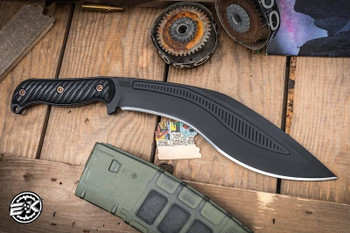
The Kukri knife hails from Nepal and has been wielded by the famed Gurkha soldiers for over two centuries. This isn’t your average straight-edged knife— you might even say it’s got ‘curve appeal’. The forward-curved blade isn’t just for show; it’s designed for raw chopping power that’s hard to beat.
That signature curve means more force with less effort. One swing and you’re slicing deep, whether it’s through jungle vines or enemy lines. Kurkuri gives you a survival tool and combat weapon rolled into one, with serious chopping credentials.
Combat Efficiency – Chop It Like It’s Hot
Where the Bowie is balanced and nimble, the Kukri is all about brute strength. Its weight-forward design delivers devastating impact with each strike—think axe meets machete, but sleeker and easier to direct. The curve guides the blade deeper into the target, making it a natural for cleaving through tough material, and earning the Kukri a top spot in the knife hall of fame.
It’s the go-to blade for close-quarters combat where every swing counts. It’s also a survivalist’s dream—great for batoning, chopping wood, or scaring off wild animals (or wild neighbors).
Why the Kukri is a Cutthroat Contender
- Chopping champ – The curve boosts force, making it an axe in disguise.
- Versatility – Handles combat, survival, and even camp chores like a pro.
- Proven in battle – Used by Gurkhas and elite forces around the globe.
Need a knife that can chop through obstacles? The Kukri’s got your back (and possibly your front, depending on how you carry it).
Bowie vs. Kukri: Which Blade Wins Your Hand?
Let’s face it—both blades are sharp choices. And our usual answer to “which knife?” questions is, “one of each”. But if you must choose just one, let’s help you decide which is right for your personal arsenal.
Choose the Bowie if you:
- Want a knife that’s quick, precise, and versatile for both combat and utility work.
- Prefer a blade with historical swagger and fast handling.
- Need something balanced for both slashing and thrusting.
Choose the Kukri if you:
- Need serious chopping power for survival or close combat.
- Want a blade that’s also useful around camp—cutting, batoning, and looking cool.
- Prefer a heavy-duty knife that packs a wallop.
In other words, if you need finesse and speed, Bowie’s your blade. If you want raw power and chopping dominance, Kukri is king.
Two Legends, One Choice
Bowie and Kukri knives didn’t just fall into the spotlight; they carved out their place through centuries of hard use and harder battles. Whether you favor the razor-sharp elegance of the Bowie or the slicing brute force of the Kukri, you’re getting a knife that’s built for serious action.
At the end of the day, it’s all about how you plan to use your blade. Do you want precision strikes and historic style? Go Bowie. Need something to hack through the wilderness and stand up to a fight? Go Kukri.