
Why Powder Metallurgy Makes Better Knives
Posted by EKnives on Jan 29th 2026
You've probably heard fellow knife enthusiasts talk about steels like S35VN, M390, or CPM-20CV. These premium materials aren't just for bragging rights or knife nerds. They're some of the sharpest, hardest-working steels around. But what makes them stand out?
The answer lies in the magic of powder metallurgy (PM), also known as powder steel. This process has changed modern knife making, delivering edge retention, toughness, and corrosion resistance that traditional forging methods can't quite match.
Perhaps you're browsing collectible knives for sale, seeking a special new addition to your cache, and wondering what you should look for. Or maybe you simply want to understand why some blades cut through tough material like slicing through air. Either way, grasping the benefits of powder metallurgy gives you the inside scoop on why certain knives command attention, and yes, higher price tags.
Let's slice into what makes PM knives worth every penny and why they deserve a spot in your rotation.
Powder What-allurgy?
Time for a little science, but don't worry. We'll keep it brief and interesting.
Powder metallurgy starts by atomizing molten steel into a fine powder. That powder is then compressed and heat-treated, or sintered, into solid steel. The trick is that this method distributes carbides extremely evenly. Those are the tiny hard particles in steel that dictate wear resistance.
Compare this to traditional forged or cast steel, where carbides can clump, weaken the structure, and make the blade prone to chipping. PM steels produce a fine, uniform microstructure, resulting in blades that last longer, perform better, and resist chips even under tough conditions. Think of it as the difference between a patchy sidewalk and a perfectly paved street: One's unpredictable, the other smooth sailing.
Science lesson over.
Unmatched Edge Retention
Edge retention is where PM steels really shine. It stays shaper, longer. Anyone who carries a knife daily knows how quickly a dull edge becomes a headache. Powder metallurgy blades stay sharp, thanks to the even dispersion of vanadium and other carbides throughout the steel.
Take CPM-S90V, for example. It's loaded with vanadium carbides that are tougher and more wear-resistant than older chromium carbides. The result is a blade that stays razor-sharp through repeated use, meaning less time sharpening and more time slicing. If you like to cut, not grind, PM steels are a serious upgrade.
Models like the Benchmade Bugout with CPM-20CV demonstrate how this translates to real-world performance. Edge retention is king, and you'll notice the difference the first time you slice through a cardboard box or make cuts at camp.
Strength Without Sacrifice
Blades often balance on a knife-edge between hardness and toughness. A super-hard steel may chip or snap under lateral stress, whereas a softer steel dulls more quickly. Powder metallurgy manages to combine the best of both worlds.
Thanks to its fine-grained structure, PM steel can achieve high Rockwell hardness (a scale used to measure a material's resistance to penetration or indentation) without becoming brittle. Blades like M390 or CPM-20CV can handle rope, cardboard, game, or whatever task you throw at them, without chipping or cracking.
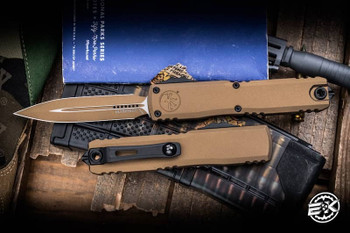
For knife users, this means confidence. You're wielding a blade that can take a beating. With a PM knife like the Microtech Ultratech in M390, you get a tactical classic that holds its edge like no ordinary steel could.
Corrosion Resistance That Keeps Up With Life
Another perk of PM steels is high corrosion resistance. Thanks to elevated chromium levels and other alloying elements, these knives resist rust and pitting far better than many traditional steels.
Take M390, often called "the ultimate stainless." From humid summer days to salty marine environments, this steel can shrug off the elements. No need to treat it like a display piece. This PA metal thrives in real-world conditions. A PM knife is ready for action, letting you cut, carve, or make camp without worrying about immediate corrosion.
Things to Consider Before Buying
While powder metallurgy knives are incredible, they're not for every budget or every hand. The advanced manufacturing process means higher price points, but the payoff is long-term performance.
A few things to keep in mind:
- Sharpening: PM steels are harder, so diamond stones or high-quality sharpening systems are necessary. You'll need to sharpen less often, but when you do, the process is more specialized.
- Maintenance: The edge lasts longer, but restoring it requires effort and care. Fewer things can hurt your knife, but if you do get damage, it's tougher to address.
- Price: You'll pay more upfront, but you get a performance ceiling far above that of standard blades.
For beginners or budget-conscious collectors, start with one PM knife and then expand your collection once you fall in love (and you probably will). For veterans chasing peak performance, these steels represent a lifetime investment in reliability and precision.
Add a Powder Metallurgy Knife to Your Collection
Powder metallurgy isn't just a quiz answer in a metal science class. It's a revolution in knife-making. PM steels offer unmatched edge retention, toughness, and corrosion resistance, making them the ideal choice for serious EDC users, survivalists, and collectors alike.
Owning a PM knife is about more than function. It's about craftsmanship, engineering, and the joy of a blade that performs precisely as it should. These knives elevate your experience, turning every cut into a reminder of why you fell in love with knives in the first place.
For those building a collection, exploring PM steels is a must. The combination of cutting-edge metallurgy and superior design makes these blades stand out in both performance and style. If you're in the market for a reliable, high-quality, and durable knife, PM steel options should be at the top of your list. They're the knives you reach for first and the ones you'll pass down later.
Once you carry one PM knife, you'll understand why enthusiasts rave about this steel and why it deserves a spot in every serious collection.