
How the Legendary Bowie Knife Became a Modern Classic
Posted by EKnives on Apr 16th 2026
The Bowie knife has a reputation that cuts deep. It's big, bold, and instantly recognizable, even to folks who don't spend much time thinking about steel. From dusty frontier duels to modern tactical kits, the Bowie has stayed sharp by adapting to the needs of each era. If you're eyeing a Bowie knife for sale, you're not just looking at a blade. You're stepping into a long, hard-used tradition that still earns its keep today.
This guide walks through how the Bowie knife evolved, why its design still works, and what makes it relevant in a world filled with high-tech materials and precision manufacturing. Along the way, you'll see how classic traits carry over into modern examples, proving that good blade geometry never goes out of style.
Built for Frontier Survival
The Bowie knife traces its name back to James "Jim" Bowie, a larger-than-life frontiersman whose reputation grew after the 1827 Sandbar Fight. While historians still debate the exact design of his original blade, the knife used in that epic duel and the legend it sparked shaped everything that followed. Early Bowies were large, intimidating, and built for survival in unforgiving terrain.
On the frontier, a knife had to earn its spot on your belt. It was a daily-use tool and an absolute necessity. A Bowie could defend you, help you hunt, clear brush, split kindling, and handle camp chores without complaint. If a blade couldn't pull its weight, it didn't last long. That pressure forged a design that valued strength, reach, and versatility.
The Design DNA That Defines a Bowie
While Bowie knives vary in size and styling, they share a few defining traits that make them instantly recognizable. The most famous is the clip point blade. That clipped tip sharpens the point for piercing, while keeping a long cutting edge for slicing. It's a shape that balances finesse and force, like a boxer who can dance but still hits hard.
Blade length commonly falls in the 8- to 12-inch range, giving the Bowie serious reach and cutting power. That length isn't about showing off. It allows longer strokes, deeper cuts, and better leverage during demanding tasks. Add a thick spine, and you've got a blade that doesn't flinch under pressure.
Handles have evolved from wood and bone to modern materials like Micarta and G-10, but the goal remains the same. They need to fill your hand, stay secure, and resist slipping when things get messy. Many Bowies also feature a crossguard, a practical nod to their fighting roots that keeps your hand from sliding forward at the wrong moment.
From Battlefield to Field Craft
The Bowie knife didn't stay on the frontier. During the Civil War, many soldiers carried Bowies as personal sidearms, often custom-made and deeply valued. These knives were tools, backups, and symbols all rolled into one. Many were passed down through families, their scars telling stories long after the fighting stopped.
In World War II, Bowie-inspired designs influenced combat knives like the Ka-Bar, which borrowed the long blade and robust construction that made the Bowie famous. That lineage continues today in modern fixed blades built for military, survival, and heavy-duty field use. The Bowie proved early on that it could adapt, and it's been proving it ever since.
Still Pulling Its Weight in Hunting and Survival
Despite its dramatic history, the Bowie knife remains practical. Hunters still rely on Bowie-style blades for processing large game, especially when strength and reach matter. The wide blade and pronounced belly help with skinning, while the sturdy tip handles joint work and tougher cuts.
In survival situations, the Bowie shines as a general-purpose tool. It can baton wood, clear brush, prep food, and assist with shelter building. It's the kind of knife that feels comfortable doing a little of everything. While specialized tools may outperform it in narrow tasks, the Bowie's versatility keeps it relevant when you need one blade to cover many jobs.
Tactical Evolution to Smarter Steel and Better Control
Modern Bowies benefit from advances in steel and handle design. Powder metallurgy steels improve toughness and edge retention. Protective blade coatings reduce glare and corrosion. Full-tang construction eliminates weak points, ensuring the knife can handle abuse without tapping out early.
Handle ergonomics have also improved. Subtle contours, textured scales, and thoughtful balance make modern Bowies easier to control during extended use. These updates don't change the soul of the knife. They simply make it better suited for today's demands.
Cultural Icon With Real Utility
The Bowie knife has long been a symbol of rugged independence. It's shown up in classic Westerns, military documentaries, and even survival reality shows. Whether it's strapped to a cowboy's hip or displayed in a collector's case, it carries weight beyond its steel. That gives it a special place in knife culture.
For many people, owning a Bowie is about connecting with that heritage. But the design isn't stuck in the past. It continues to earn respect because it works.
Collectors appreciate the craftsmanship and history. Outdoorsmen value the performance. Tactical users respect the durability. Few knife designs manage to cross so many lines without losing credibility.
Modern Examples of a Classic Shape
While you can still find classic Bowies, many knives today have taken the formula and run with it, creating designs with the soul of the original and features that make sense for today's users. They blend old-school geometry with modern engineering.
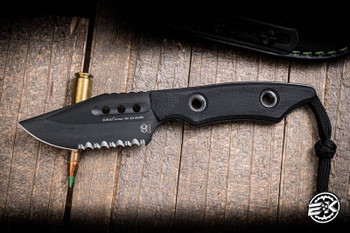
A solid example of this evolution is the Benchmade Anonimus, which channels Bowie-style strength into a compact, purpose-built fixed blade. While it's scaled down from traditional frontier giants, this Bowie-inspired knife keeps the thick spine, aggressive tip, and durability that define the Bowie lineage. It's a reminder that the core principles still work, even when adapted for modern carry and use.
Another modern interpretation that draws from Bowie lineage comes from the Microtech fixed-blade lineup, where knives like the SOCOM Alpha bring premium steels and contemporary ergonomics to the classic clip point profile.
These knives show how manufacturers can honor tradition while sharpening performance with updated materials, shaping, and manufacturing techniques.
Choosing the Right Bowie for You
If you're considering adding a Bowie to your lineup, here are a few things to consider:
- What's your primary use? Hunting, survival, display, or general utility?
- Do you want a traditional carbon-steel blade or a modern stainless option?
- Consider blade design. Full tang offers more strength.
- Handle material: Go for something grippy and weather-resistant.
Also consider size. While traditional Bowies are on the larger side, many newer models scale down for easier carry without sacrificing cutting power.
A Design That Keeps Its Edge
The Bowie knife proves that strong design doesn't go dull with age. It adapts. From muddy riverbanks to modern workshops, the Bowie has evolved while staying true to its roots. When you carry one, you're carrying a shape refined by generations of hard use.
That kind of legacy isn't built overnight. It's forged through time, tested by necessity, and sharpened by innovation. And that's why the Bowie knife still holds its edge today.