
How to Carry a Kubaton Without Making Your EDC Look Tactical
Posted by EKnives on Oct 15th 2026
A kubaton is one of the smallest tools in a self-defense kit, but it often looks the loudest. Aggressive features turn a keychain-sized tool into something that reads more like a prop from an action movie than an everyday item. That's fine if bold is your style. If it's not, a few smart choices can keep a kubaton in your EDC lineup without turning your keys into a statement piece.
None of this changes what the tool does. The only difference is how much attention it draws.
Most Kubatons Scream Tactical Gear
Scroll through listings of kubatons for sale, and you'll quickly notice a pattern: frag-textured grips, gunmetal finishes, and pointed tips designed to look as intimidating as possible. Manufacturers lean into that look because it sells well to buyers who want their gear to look the part.
The trade-off is that a design built to look tough is also one built to draw attention. A tool shaped like a miniature spike or finished in tactical black stands out when it's sitting next to your house key on a counter or clipped to a belt loop.
A well-curated online knife store tends to carry a wider spread of shapes and finishes than a single marketplace search, making it easier to find something low-key.
There's nothing wrong with wanting gear that looks the part. If you want a kubaton that looks mean, you aren't alone. Plenty of EDC carriers like that aesthetic, and there are many options built exactly for that crowd. But there are pieces for the other half of the kubaton audience: people who want the same functional tool without the visual statement attached.
Pick a Shape That Doubles as Something Else
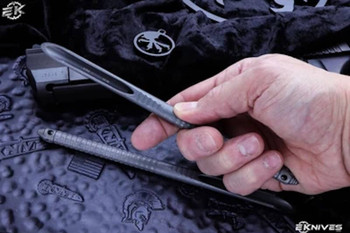
The easiest way to keep a kubaton low-key is to choose one shaped like an object people already expect to see on a keyring. Pen-style kubatons are a common choice for exactly this reason. At a glance, it reads as a pen, not a self-defense tool. Sneaky, in the best way.
Compact cylindrical designs work the same way. A smooth, rounded profile without ridges or a pointed tip looks closer to a flashlight or a multitool than anything tactical. The goal is a shape that fits in with the rest of your keychain instead of standing apart from it.
Whatever shape you land on, the disguise needs to survive more than a glance. For example, a pen-style tool should have a clip that sits flush like a real pen's would. The cap or barrel shouldn't rattle loose on your keyring. A design that looks the part but falls apart under normal handling defeats the purpose of choosing it in the first place.
Stick to Neutral Colors and Simple Finishes
Color does as much work as shape when it comes to blending in. Simple black or gray metallic finishes read as ordinary hardware. Bright tactical colors and busy, textured coatings do the opposite. They're built to be noticed, which works against the goal of a discreet carry.
Watch out for the gap between plain black and "tactical black," though. That name usually signals more than just color. It often comes bundled with the same aggressive milling and texture covered earlier. A coating marketed that way tends to look tactical, no matter how dark and simple the color itself is.
A few quick comparisons make the difference easy to spot:
- Spiked tip versus rounded tip: A rounded or blunt profile looks like a tool. A pointed tip looks like a weapon.
- Matte tactical black versus brushed metal: Tactical coatings signal combat gear. Brushed metal signals everyday hardware.
- Aggressive milling versus a smooth barrel: Deep grooves and frag patterns catch the eye. A smooth surface doesn't.
Attach It Where Your Keys Already Live
Carry a subtle kubaton in a way that announces it as a weapon, and it's still going to look tactical. A separate tactical pouch or MOLLE clip draws exactly the kind of attention a low-key kubaton is trying to avoid.
The simpler move is to add it directly to your keyring, the same way you would a bottle opener or a small flashlight. It sits among items people already expect to see and stops reading as a standalone tool. If you prefer it off your keys, a discreet pocket clip works well too, as long as the kubaton itself is small enough to disappear into a pocket rather than print through the fabric.
A basic split ring or a low-profile quick-release clip keeps the setup simple. Bulky carabiner-style attachments tend to work against the goal here, since a large clip draws the same kind of attention as an aggressive finish, just in a different way.
Match It to the Rest of Your Loadout
A kubaton rarely sits by itself. It shares a keyring or a pocket with whatever else makes up your everyday carry, and the whole set reads as one impression rather than a handful of separate ones.
This is where the rest of your loadout can either back up a low-key kubaton or work against it. Imagine your EDC knife is a Chris Reeve Mnandi. Its clean lines and sophisticated finishes feel boardroom-appropriate rather than tactical, despite being every bit as capable as a harder-edged tactical knife. With a "gentleman's knife" like this, your overall kit seems less aggressive.
Pair a kubaton with EDC pieces that share that same restrained, professional feel, and the whole setup stays consistent.
The reverse holds too. A sleek, rounded kubaton next to a knife covered in aggressive branding and tactical coatings still draws a second look, since the loadout as a whole reads tactical.
Test It Before You Commit to the Setup
The best way to know if a kubaton reads as everyday or tactical is to look at it the way a stranger would. Lay your keys out on a table or hand them to a friend and ask what stands out. If the kubaton is the first thing anyone notices, then the shape, color, or mounting is still doing too much work.
This kind of test also catches problems that a product photo won't. A finish that looks subtle online sometimes reads as shiny or harsh in person. A shape that seemed compact in a listing can still feel bulky once it is actually clipped next to your house key. A five-minute check before you commit to your daily carry saves you from having to redo the whole setup later.
One more thing before you commit to a setup: rules on carrying a self-defense tool like a kubaton vary by state and city. Some venues, such as schools or courthouses, set their own restrictions. Those rules apply regardless of how subtle or tactical a tool looks. Check your local laws and any venue-specific rules before you add one to your keys.
Blending In Doesn't Mean Giving Up Readiness
A kubaton doesn't need to look tactical to be useful. Shape, color, and mounting are the three levers that decide whether it reads as everyday gear or a tactical statement. None of those elements change what the tool actually does.
Discreet and ready aren't opposites. A low-key kubaton still does exactly what a spiked, matte-black one does. It just doesn't announce itself until you need it to.