Tactical Pens Can Be Mightier than the Sword for Personal Defense
Posted by EKnives on Jul 24th 2025
Ahh, the tactical pen. These sleek little tools may look like regular writing tools, but don’t be fooled. These are stealthy self-defense scholars hiding in your pocket. And while owning one is a good first step in the right direction, knowing how to use it takes your safety game from butter-knife basic to razor-sharp readiness.
We’ll walk you through how to master the skills that turn a tactical pen into a self-defense game changer. Whether you’re out for a solo stroll, navigating sketchy travel zones, or just want to feel more secure on your daily commute, a little training can turn your pen into a powerful peace-of-mind partner, or even a lifesaver.
Why Carry a Tactical Pen?
A tactical pen is like a writing tool that went through special forces training. It scribbles your grocery list just fine, but it’s made of rugged stuff, often aerospace-grade aluminum or titanium. It’s built for more than jotting notes. Think of it as the Swiss Army knife of the writing world: reliable, discreet, and ready to get scrappy in any bad situation. Just because it doesn’t have a blade doesn’t mean it can’t make an attacker think twice or give up and move on.
These self-defense tools have a sharp, reinforced tip. That makes them suitable for striking, jabbing, and making anyone who messes with you wish they’d stayed home. They are feisty enough to leave a heck of a bruise, or in some cases, even a highly damaging puncture.
One of the biggest perks? Because they don’t have sharpened blades, tactical pens are often legal in places where knives or pepper spray aren’t. (We still recommend checking local laws. You don’t want your EDC to land you in hot water.)
These compact tactical beasts blend form, function, and force in one sleek package. It’s the kind of gear with enough subtlety to fly under the radar but still packs a punch when it counts.
Get a Grip
You probably learned how to hold a writing utensil in kindergarten, when you were writing with crayons. But when you’re using your pen as a weapon, the standard writing grip won’t cut it.
Before you start wielding your pen like a pro, you’ve got to learn how to hold it. There are two main grips for tactical pen technique:
- The Hammer Grip: Hold your pen like you’d grip a hammer: firm and ready to strike. The tip should stick out from the bottom of your fist. It’s a natural, stress-friendly grip that delivers powerful downward or upward strikes.
- The Ice Pick Grip: Think of stabbing a block of ice at a murder mystery dinner party (but, you know, less theatrical, although you are free to make the “ree, ree, ree!” noise for maximum effect). In this grip, the tip pokes out the top of your hand. Perfect for overhead jabs in tight quarters.
Whichever grip you choose, don’t fumble around like a butterfingered apprentice. Practice until switching between grips feels smooth and instinctive, so that when you need it, your grip is honed like a fine blade.
Aim for the Tender Spots
Once you’ve got your grip down, it’s time to pick your targets. Of course, you hope to never have to use your tactical pen in a fight, but you wouldn’t be carrying it if you didn’t want to have the capability, just in case.
In a real-life confrontation, your goal isn’t to win style points. It’s to create enough pain or surprise to get to safety.
Aim for the squishy spots:
- Temples
- Nose
- Collarbone
- Solar plexus (center of the torso, just below the rib cage)
- Ribs
- Inner thighs
- Hands, knees, and shins
Avoid heavily muscled areas like the chest. Your pen’s bark won’t bite as well there. Instead, focus on soft tissue and joints. Each jab should be quick, intentional, and strong enough to break through the attacker’s plan like a tanto tip through packing tape.
Block, Trap, and Jab Back
Your tactical pen isn’t just for jabbing your way out of trouble. It’s also handy for defensive plays. You can use it to block strikes, press into pain points, or trap a limb in a clever counter-move.
If someone grabs your wrist, jab the pen into the web between their thumb and index finger, and apply pressure. They’ll drop that grip and likely not try again. Dig into forearms, rake across knuckles, or swipe at shins. Many Microtech pens, as well as offerings from other brands, come with a beveled design. Those edges will leave a lasting impression—literally.
Practice Until It’s Second Nature
Let’s face it: nobody becomes a tactical pen master by binge-watching action movies. Skill comes from repetition. Practice grips, strikes, and transitions regularly. Shadow-train your responses or use a training dummy to get a feel for impact and accuracy.
Walk through real-world scenarios. What would you do if someone approached you in a dark parking lot? If you were cornered in an elevator? The more you rehearse, the more your brain will react automatically when it needs to. Hesitation can dull your edge. Even a fraction of a second can mean the difference between a successful defense and a Really Bad day.
And don’t forget the mental side of training. Situational awareness, calm thinking, and de-escalation are just as important as a powerful jab. Keep your wits as sharp as your pen skills.
Carry It Like You Mean It
A tactical pen at the bottom of your backpack is about as helpful as a steak knife in a soup shop. You need to carry it where you can reach it fast. Clip it to your pants pocket, shirt collar, MOLLE gear, belt, or jacket breast pocket, or wherever gives you quick access without all the rummaging.
Be stealthy, not showy. Don’t advertise your pen as a weapon. Its strength lies in being discreet. This is a surprise tool for unexpected situations. Plus, that low-key approach lets you blend in and keep the upper hand.
Know When to Strike and When to Walk Away
Let’s be clear: your pen isn’t a license to jab your way through every awkward encounter. Use your voice, your distance, and your instincts first. De-escalation should always be your opening move.
But if danger closes in and talking won’t cut it, your tactical pen gives you the leverage to turn the tables. Use it only when you feel physically threatened, and always know your local laws. Even a common EDC item like a tactical pen can fall under self-defense regulations depending on where you live.
If you ever use it in a real confrontation, report the incident to authorities and document everything. You have the right to defend yourself, but wield that right responsibly.
The Sharpest Tool in Your EDC Kit
In the end, a tactical pen is more than just another piece of gear. It’s a pocket-sized protector that punches above its weight. With training and confidence, it becomes more than just something you jot grocery lists with. It becomes your backup plan in high-stakes moments.
And when it comes to tactical advantages that don’t have a blade or trigger, a Benchmade pen or writing weapon from another respected maker is hard to beat. It offers solid construction, sleek design, and the kind of performance you can count on when life gets dicey.
So sharpen those skills, practice like a pro, and carry with confidence. Because when life throws you a curve, the right pen might just write you out of a tight spot. With these tactical tools, the pen truly is mightier than the sword.
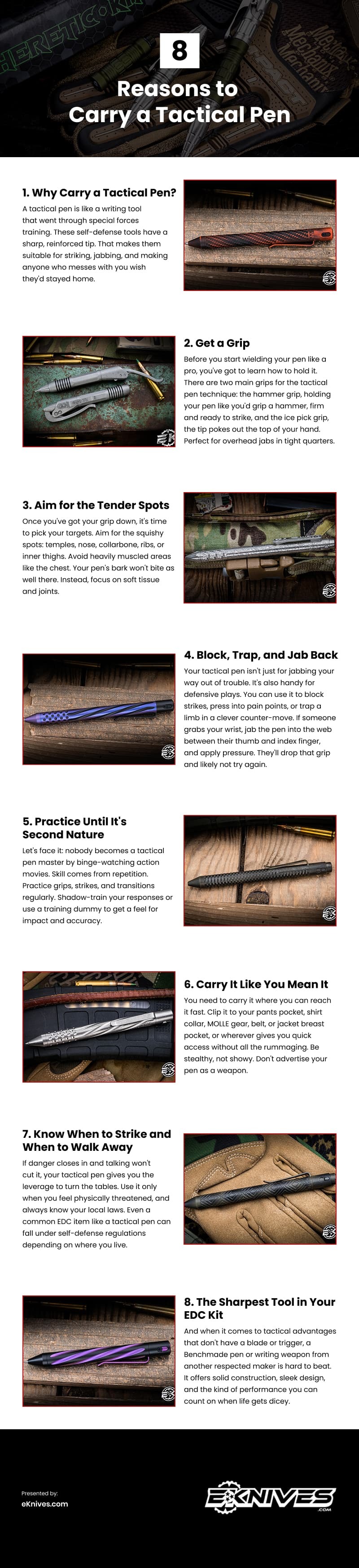
Infographic
The tactical pen may appear to be an ordinary writing tool, but it is a discreet powerhouse in your everyday carry kit—part pen and part self-defense weapon. Read on in this infographic to discover the reasons for carrying a tactical pen.