
Reel vs. Real: What Films Get Wrong About Throwing Knives
Posted by EKnives on Aug 13th 2026
Hollywood has a long-standing love affair with thrown blades. Directors use them because they’re visually striking, silent, and instantly dangerous-looking without involving firearms. Audiences buy into it because there’s something undeniably cool about a spinning blade finding its mark from across a room, like it was guided by invisible wires.
Knife enthusiasts tend to view those scenes differently. For them, every cinematic knife throw is less “wow” and more “well, let’s talk about it.”
Once you understand how throwing actually works, it becomes impossible to unsee the gap between fiction and reality.
Hollywood’s Love Affair With the Thrown Blade
Thrown knives have been a staple of action cinema for decades. You’ll see them in spy thrillers, superhero films, martial arts epics, and Westerns. They’re the weapon of choice for assassins, circus performers, shadowy villains, and the occasional antihero who wants to make a point without saying a word.
Characters like Elektra Natchios deliver blades with choreographed precision in the Marvel universe. Bullseye takes it further, turning anything within reach into a projectile weapon. The John Wick films stage knife work with such careful choreography that even thrown blades feel like part of a grounded system. Gangs of New York gives us Bill the Butcher, whose knife skills nod toward real historical close-combat traditions. Even James Bond films regularly use thrown blades to signal a villain who is both skilled and slightly theatrical about it.
From a filmmaking perspective, it all works. A thrown blade travels fast, reads clearly on screen, and delivers tension without a gunshot. It looks like pure skill in motion.
The problem is what Hollywood quietly skips: everything between the throw and the target.
The Physics Problem No Screenwriter Wants to Hear
Real knife throwing is less “instinct and flair” and more “angles, distance, and rotation math.”
A thrown knife spins based on release force, grip position, and distance. To land tip-first, it needs to complete a very specific number of rotations before impact. Too close and it hits handle-first. Too far and it over-rotates and lands off angle. Experienced throwers don’t guess. They calibrate distance down to repeatable marks.
That’s where movies start to drift off target.
On screen, knives fly from any distance, at any speed, and still land perfectly point-first. Characters throw while sprinting through explosions, jumping across rooftops, or sliding across floors, and somehow still achieve center-mass precision. Villains throw through moving vehicles. Heroes land perfect hits from across dark warehouses with zero setup.
Real throwing doesn’t forgive improvisation. You need a stable stance, known distance, and a consistent release. If any of those variables change mid-throw, so does the result. There’s no mid-flight correction. Once it leaves your hand, the blade is committed to its path, no matter how cinematic the moment feels.
Then there’s the logistics problem. Fictional throwers seem to carry endless knives. Real throwing is a retrieve-and-reset discipline. You throw, you walk to the target, you retrieve the blade, and you reset. No bottomless pockets. No infinite reload.
Hollywood calls it editing. Physics calls it wishful thinking.
What Real Throwing Knives Actually Look Like
In the movies, any knife is a throwing knife. Film props are designed for drama. Real throwing knives are designed for repetition.
Most cinematic blades are sleek, ornate, or aggressively stylized to read well on camera. Real throwing knives are much more utilitarian. They are usually single-piece steel construction, built to survive repeated impact against wood without cracking, bending, or breaking.
Balance matters more than flash. Weight distribution is carefully tuned for predictable flight. Some knives are weighted toward the blade, others toward the handle, depending on technique.
Spin throwing uses balanced knives that rotate consistently through the air. No-spin throwing relies on heavier designs that reduce rotation and stabilize forward motion. Both styles demand different tools, and neither looks as flashy as Hollywood prefers.
The closer you get to real sport designs, the more the knives start to look like tools instead of props. Functional. Plain. Honest. The kind of blade that does its job without asking for applause.
The Craft Behind the Sport
Knife throwing isn't just a movie trick. It’s a legitimate sport with international governing bodies, including the International Knife Throwers Hall of Fame (IKTHOF), and a dedicated community of athletes who treat it seriously.
Competition throwing involves measured distances, strict rules, and repeatable scoring systems. It rewards consistency over flair and control over chaos. It looks nothing like a choreographed action sequence.
Learning to throw well takes time. Beginners usually start with distance calibration. Too close and the blade hits wrong. Too far and it loses rotation. Over time, throwers develop a sense of spacing that becomes second nature. It’s less about “hurling a blade” and more about repeating a precise motion until it becomes reliable.
There’s a rhythm to it that feels closer to archery or darts than anything cinematic. Clean release. Clean flight. Clean impact. No drama required.
Axes, Tomahawks, and the Bigger Throwing World
Knife throwing isn’t the only blade sport that gets misunderstood.
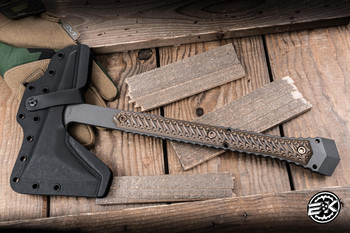
Tomahawk throwing has its own place in both sport and recreation, and it’s often what people imagine when they start looking for throwing axes for sale. Modern throwing axes and tomahawks are purpose-built tools designed for controlled rotation, durable impact, and repeatable accuracy.
They behave differently than knives because of their weight distribution and aerodynamics, but the same core principles apply: distance matters, consistency matters, and practice matters more than anything else.
Many enthusiasts who explore throwing axes eventually branch into knife throwing, or vice versa. Both disciplines reward patience and precision, even if one looks a bit more intimidating at first glance.
For those interested in exploring both styles, a specialized online knife store can be a practical starting point for understanding the differences in design, balance, and intended use before committing to a particular tool or sport.
Why the Fantasy Keeps Flying
Despite the inaccuracies, cinematic knife throwing isn’t going anywhere. It shouldn’t. The fantasy version exists to serve storytelling, not physics. It's cool to watch, even if it's not realistic.
A thrown blade communicates control, skill, and danger in a single visual beat. It tells you everything you need to know about a character without a line of dialogue. The gap between fiction and reality isn’t a flaw. It’s just two different jobs. One is built for narrative impact, the other for repeatable performance.
The fictional version often sparks curiosity about the real one. A dramatic throw on screen can lead people toward sport throwing, proper technique, and a deeper appreciation for the discipline behind it.
Real throwing knives aren’t as flashy as their cinematic counterparts, but they don’t need to be. They’re built for consistency, repetition, and control, refined through practice instead of choreography.
Movies make it look effortless. Reality makes it earned.
And once you understand the difference, every on-screen throw carries a little less magic and a lot more respect.