
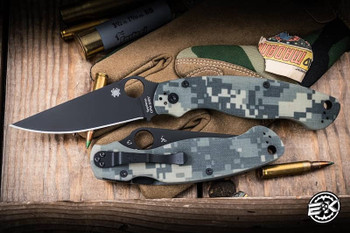
Where Do Knives Fit in Military Equipment Upgrades?
Posted by EKnives on Jun 25th 2026
When you think about Army equipment upgrades, your mind probably jumps straight to body armor, optics, communications gear, or load-bearing systems. Those are the obvious headliners, and that's fair enough.
But a knife still holds a steady, respected place in the gear conversation because it solves practical problems fast. We're talking cutting webbing, opening crates, trimming cord, preparing field-expedient materials, and handling dozens of small tasks that never make the brochure but happen constantly in real field environments.
If you've ever eyed military knives for sale and wondered whether they're worth the investment as part of a serious kit, the answer is almost always yes, and the reasons go deeper than you might expect.
Why Knives Still Matter in a Modern Kit
Modern military gear has become more specialized and more modular over time. That's changed how every single item earns its place in a loadout. A knife doesn't need to do everything anymore. It needs to do specific tasks well, carry cleanly, and stay accessible under stress. That's a focused job description, and the best knives nail it.
If you're looking at equipment upgrades through that lens, knives still make sense because they remain one of the fastest tools to deploy for immediate cutting work. A multitool may offer more functions. A rescue hook may handle certain jobs more efficiently. A knife fills an important space between those options because it gives you speed, control, and flexibility all at once, without asking you to flip through a dozen different tools to find the right one.
You can see that reality in the kinds of tasks that pop up constantly in a military environment. Cutting paracord. Clearing packaging. Trimming loose straps. Working with tape, fabric, and utility materials. None of those jobs sounds dramatic, but they happen all day long. A knife earns its place by keeping small problems from grinding larger systems to a halt.
The Difference Between a Generic Knife and a Real Upgrade
A knife becomes a genuine upgrade when it fits the current gear ecosystem. That means size, carry method, grip, blade shape, and access all matter significantly. You're not choosing in a vacuum. You're choosing something for a specific belt setup, a vest, a pack, gloves, weather conditions, and constant movement.
For that reason, the best military knives often share a few important traits:
- Easy access with one hand
- A grip that stays secure with gloves or wet hands
- A blade shape that handles utility cutting cleanly
- A sheath or clip setup that works with modern carry systems
Your military knife isn't a generic tool. It's part of the larger equipment picture. If it snags or forces you to fight your own loadout just to draw it, it loses its value in a hurry. The best upgrade is the one that disappears into your kit until the second you need it.
Fixed Blade or Folder?
Looking at both folders and fixed-blade knives for sale, and wondering which is best? This question comes up every time someone gets serious about practical gear, and it's worth cutting straight to the point. Both fixed-blade and folding options have a place. The answer about which is right for you depends entirely on the role you expect the knife to play.
A fixed blade offers fast deployment and has fewer or no moving parts. That makes it especially attractive for field use when you want simple access and strong reliability. It also works well when your kit already includes secure mounting options on a belt, plate carrier, or pack. If your tasks lean toward repeated cutting and quick access throughout the day, a fixed blade is hard to argue against.
A folder wins on convenience and lower-profile carry. It slips into a pocket, rides lighter in many setups, and handles daily utility work without any drama. For a lot of people, that makes it the more realistic upgrade because it integrates with existing carry habits.
If you're evaluating knives as part of a military-style loadout, the right question isn't which category is superior. The better question is what specific problem you want the knife to solve.
Blade Shape Matters More Than People Expect
Some blade shapes look impressively aggressive and still perform poorly at ordinary tasks. Others look almost plain and turn out to be far more useful across a wide range of work. In a military or field environment, utility wins the battle over vibes every single time.
Drop point blades often stand out because they balance control with cutting length in a way that feels natural for general work.
Tanto shapes can hold up well for certain hard-use tasks, but they may feel less intuitive for everyday cutting.
Serrations add real value for rope and webbing, though they can make fine cutting or field sharpening more frustrating.
Plain edges tend to handle daily work more cleanly and stay easier to maintain in rough conditions.
If your blade shape slows down the work you do most often, the design loses points regardless of how sharp it looks in a product photo.
Carry Integration Is Part of the Upgrade
A knife upgrade doesn't stop at the knife itself. Carry is a huge part of the decision, and skipping past it is one of the most common mistakes gear buyers make. A knife that performs beautifully on a workbench can become a genuine hassle on a belt or vest.
If you wear body armor, chest rigs, or pack straps, access angles change significantly. If you spend a lot of time in vehicles, certain mounting spots become uncomfortable or nearly impossible to reach quickly.
That's why sheath design and clip placement matter so much. MOLLE-compatible sheaths, strong retention, and predictable draw angles all turn a decent knife into a genuinely useful one.
The same logic applies to folders. Pocket clips, opening methods, and overall profile shape affect whether the knife becomes a reliable part of your daily routine or ends up sitting in a drawer after the first week.
This is one of the easiest mistakes to make when buying gear. People focus heavily on blade steel and forget to ask where the knife will actually live throughout the day. That question often decides whether your knife upgrade actually pays off.
Where Knives Sit Alongside Other Tools
A knife doesn't replace everything else in a modern kit. It works best when you treat it as one piece of a layered setup. A multitool still makes sense for repairs and adjustments. A dedicated rescue cutter can outperform a standard blade for strap removal near skin. A breaching tool handles jobs a knife should never try to do.
That balance is important because equipment upgrades work best when every item has a clear role. A knife supports that system by covering fast, frequent cutting tasks. It adds speed and control where you need them most.
A practical loadout often looks like this:
- A knife for immediate cutting and general utility
- A multitool for maintenance and hardware work
- A dedicated rescue or specialty cutter if your role requires it
That setup keeps each tool in its lane. It also keeps you from expecting one item to carry too much of the workload.
What Makes A Knife Worth an Upgrade
A knife earns upgrade status when it improves your day in repeatable, reliable ways. Better access. Better control. Stronger carry integration. Materials that hold up to rough, sustained use without asking for constant maintenance. You don't need a knife that tries to impress a crowd. You need one that performs consistently inside the system you already use and trust.
The bottom line is that knives still matter in military equipment upgrades because they meet everyday needs quickly and cleanly. When you get the upgrade right, you notice it every time a small job gets handled faster and more easily. In a field environment, that's the kind of edge that matters.